
Temples of Bhutan with Katerina
Jun 08, 2026Greetings, my fellow mystical traveler.
Bhutan is one of the rarest places on earth.
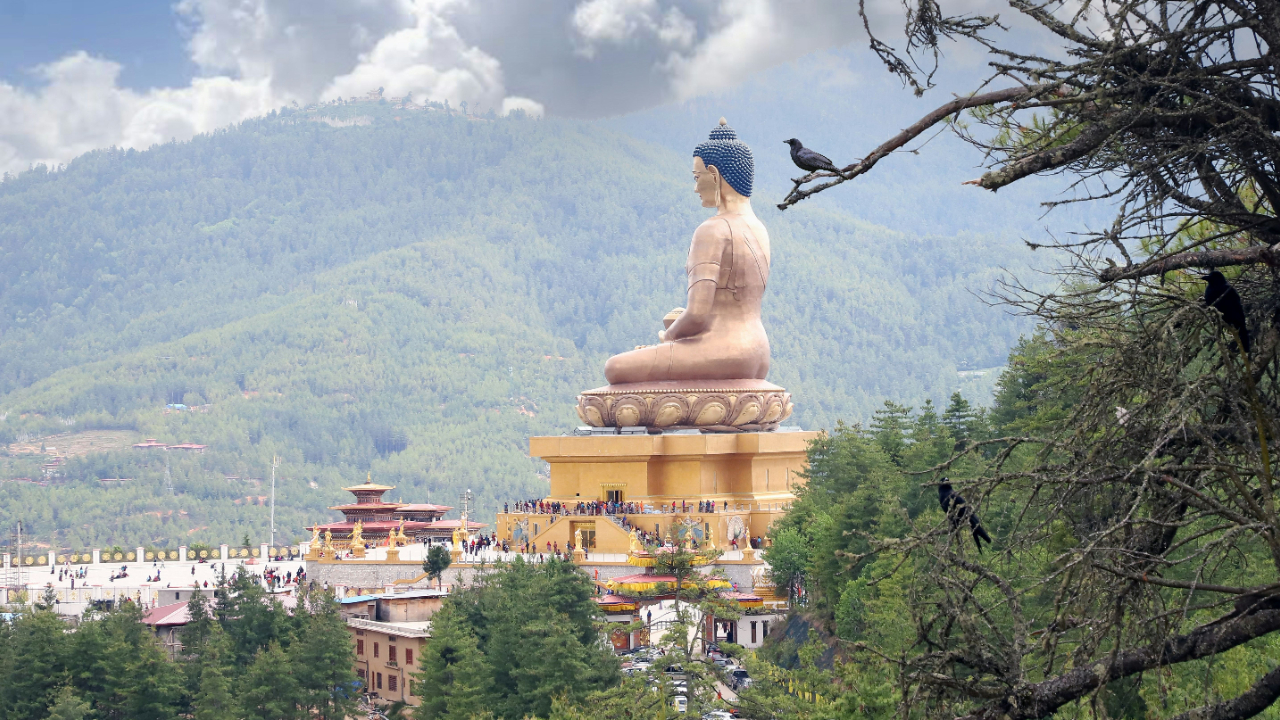
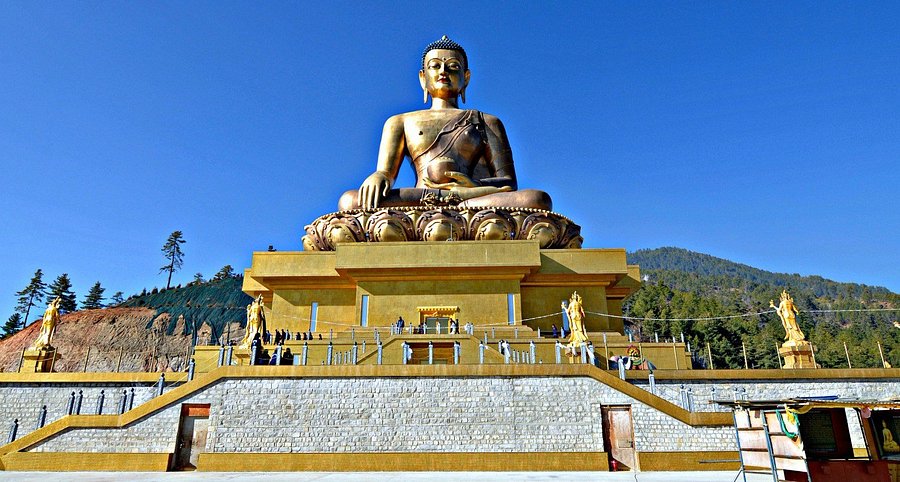
Look at the picture below — the Buddha Point, which features one of the largest sitting Buddha statues in the world. Underneath it, you can find 125,000 smaller Buddhas, each one individually crafted in gold and bronze.
According to Buddhist tradition, each visit to a Buddha statue expands one's consciousness by helping one connect with the Buddha-nature within. But this place carries something even deeper than that.
The Buddha Dordenma was not built because someone thought it would be beautiful. It was built because a prophecy said it had to be.
Guru Rinpoche — Padmasambhava, the father of Tibetan Buddhism — foretold in the 8th century that in a time of spiritual decline, a great Buddha statue would rise on this very hill to restore peace and prosperity to the world. That prophecy waited 1,300 years to be fulfilled. The statue was completed in 2015.
When you stand beneath it, you are standing inside the completion of an ancient vision.
And beneath the statue itself? A meditation hall. Where the central figure is Guru Rinpoche himself — the one who first saw this moment coming.
This is one of the places we visit on Day 2 of our Temples of Bhutan mystical journey. March 2027.
Ready to see the full iternary?
Before that, would you take 10 min to watch a film about Bhutan to get into its frequency?
I can assure you, it is worth it.
What Bhutan Taught Me About Happiness (Youtube video)
Day 1
Day 1 · March 15, 2027
Arrive at Paro International Airport
You land in one of the most dramatic airports on earth. Paro Valley receives you through a corridor of snow-capped peaks and ancient monasteries perched on cliffsides — the descent alone is enough to tell you that this is not an ordinary place. Bhutan does not ease you in. From the first breath of mountain air, something begins to shift.
Visit Tachog Lhakhang
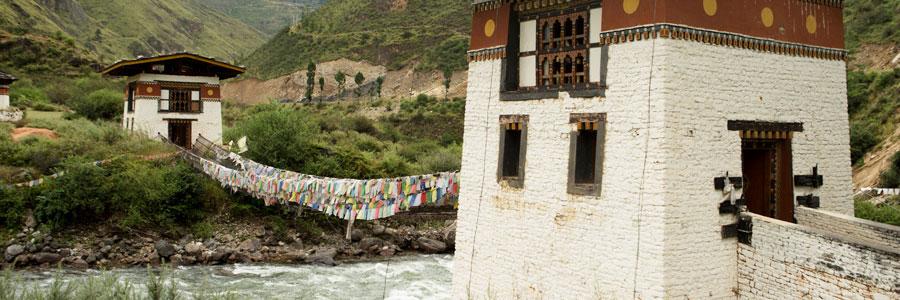
Before you even reach Thimphu, the valley offers you something extraordinary. Tachogang Lhakhang — whose name translates as Temple of the Hill of the Excellent Horse — sits across the Paro River, accessible only by crossing one of the most remarkable bridges in the world.
The iron chain suspension bridge was built by Thangtong Gyalpo in the 15th century — a legendary figure who was simultaneously a saint, blacksmith, poet, architect, and physician. He built 108 iron bridges throughout his life, eight of them in Bhutan alone, funding the work by performing opera to raise donations from villages across Tibet and the Himalayan region. When the original bridge was destroyed by a flood in 1969, portions of its ancient chains were recovered from the riverbed. In 2005, by royal decree, the bridge was rebuilt using those salvaged 550-year-old links — joined with unused chains from other bridges Thangtong Gyalpo had built — so that what you walk across today carries iron forged six centuries ago.
(Photo by Aadya Garg on Unsplash)
Inside the temple, the central figure is Chenrezig — Avalokiteshvara, the embodiment of compassion — alongside cherished relics and ancient Buddhist texts. Legend holds that Guru Padmasambhava himself blessed this site. You will cross the bridge on foot, prayer flags snapping overhead, the river rushing below. It is the perfect threshold for a journey that is only just beginning.
Light 108 Butter Lamps at Wangsisina Nunnery
This is the most intimate ritual of Day 1 — and perhaps the one that will stay with you longest.
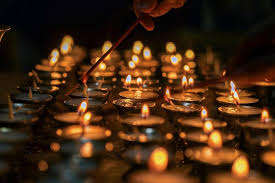
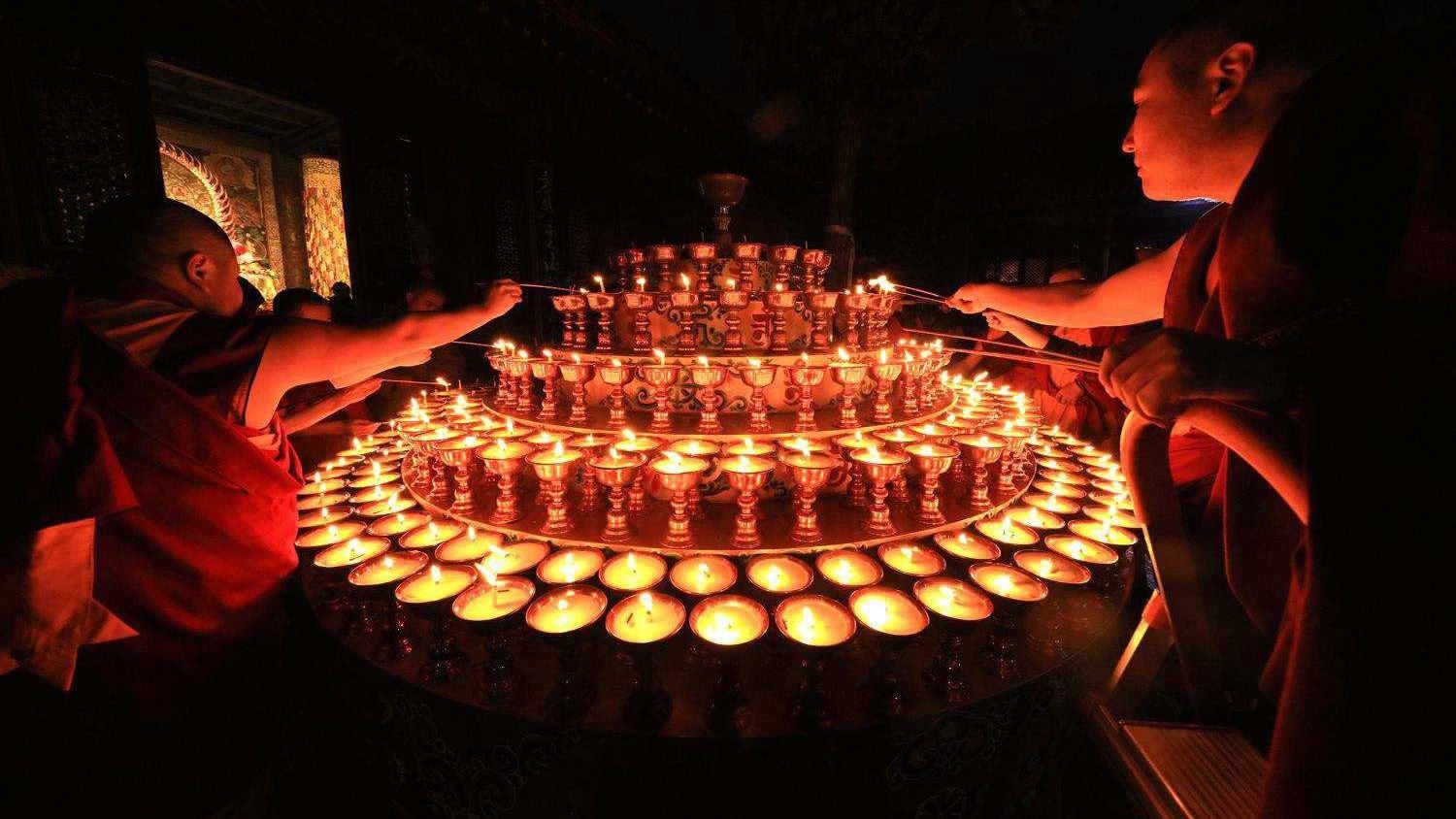
In Buddhist tradition, each of the 108 butter lamps corresponds to one of the 108 afflictive emotions that obscure the mind. Each flame lit represents the removal of one defilement. Each light is an aspiration toward enlightenment. You are not watching a ceremony. You are performing one. After each lamp is lit, the offering-maker whispers or murmurs a prayer — a private transmission between the practitioner and the sacred. The butter lamp represents the dispelling of the darkness of ignorance, and the lighting ceremony is one of the most ancient and direct means of increasing merit in the Buddhist tradition.
108 is not an arbitrary number. It encodes a cosmology — the number of afflictions to be released, the scale of the cosmos, the totality of the spiritual path. To light all 108 is to move through that totality, one small flame at a time, in a nunnery where women have been doing exactly this for generations. By the time the last lamp catches, the room is transformed. So, quietly, are you.
Visit Tashichoe Dzong
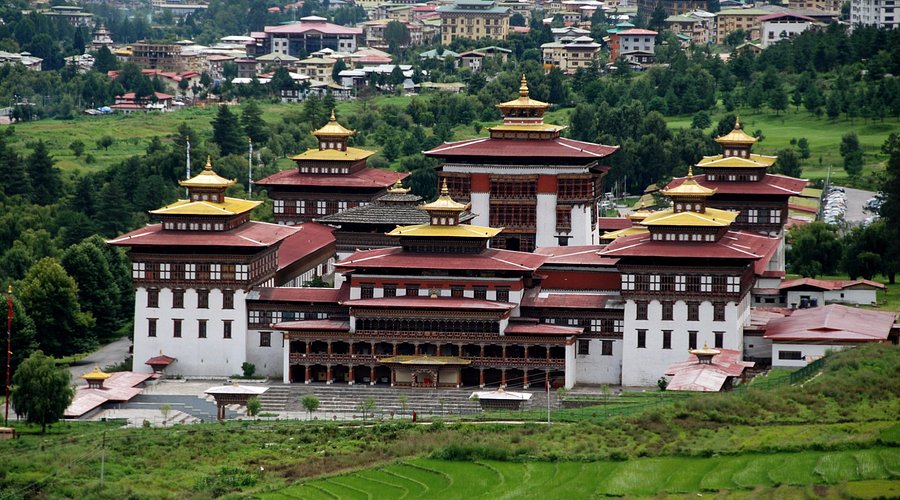
The day closes at Bhutan's seat of power — and its seat of spirit, simultaneously. Tashichoe Dzong, whose name means Fortress of the Glorious Religion, is both the administrative heart of the Bhutanese government and the summer residence of the Central Monastic Body — the two forces that have governed Bhutan, side by side, since the 17th century.
First constructed in 1216, rebuilt by Zhabdrung Ngawang Namgyal in 1641, destroyed by fire, rebuilt, damaged by earthquake, rebuilt again — the dzong has survived everything. The current structure was rebuilt entirely by the third king in the 1960s in traditional style, using neither nails nor written plans. Thirty temples, chapels, and shrines live within its walls. The King's throne room is here. The chief abbot of Bhutan spends his summers here. It is also the site of the annual Thimphu Tshechu — one of Bhutan's largest and most colorful religious festivals, drawing thousands to its courtyards each year.
Visit Craft Bazaar
The Authentic Bhutanese Crafts Bazaar (also known as the Thimphu Craft Bazaar) is a vibrant, half-kilometer stretch of exactly 80 traditional bamboo huts neatly lined up along Norzin Lam, right in the heart of downtown Thimphu.
Check into our hotel in Thimphu.
Day 2 March 16, 2027
Visit Kuensel Phodrang / Buddha Point
We begin Day 2 here, suspended above the city, invited into the kind of stillness that only comes when scale reminds you of what is eternal.
Hike to Tango Cheri Monastery
The name "Tango" traces back to the 13th century, when a revered lama saw the surrounding cliffs and rocks manifest into the form of the mandala of the horse-headed deity Hayagriva. The trail winds through an hour of shaded rhododendron forest, rising to a monastery that has served as a seat of Buddhist mastery for centuries. This is a place where monks undergo extended periods of meditation and spiritual retreat, with durations ranging from four months to three years. You will feel why the moment you arrive.
Explore Jigme Dorji National Park
One of the extraordinary qualities of this park is that it is one of the only places on earth where you can encounter all four of Bhutan's national symbols in one landscape — the takin, the blue poppy, the raven, and the cypress tree. The park holds deep spiritual significance as well, with numerous sacred sites, monasteries, and ancient trade routes woven into its wilderness. This is not a park you visit — it is one you are received by.
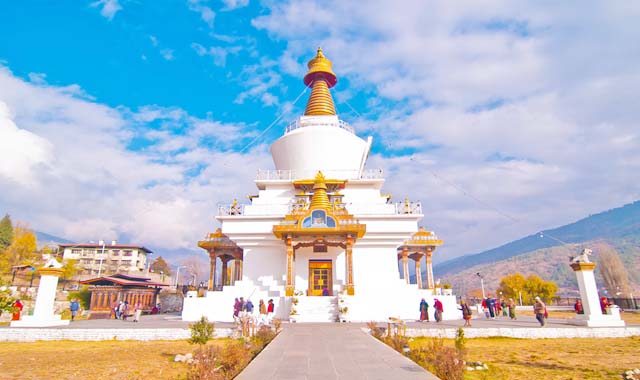
Visit Memorial Chorten / Stupa
This pristine white stupa, adorned with gleaming golden spires, was constructed in 1974 to honour the third king of Bhutan — known as the Father of Modern Bhutan. Despite not being ancient, it is considered the most sacred stupa in Bhutan, said to be wish-fulfilling and obstacle-clearing for those who circumambulate it with devotion. Throughout the day, elders gather to recite prayers and spin the great red prayer wheels — a living, breathing devotional practice you are invited to join.
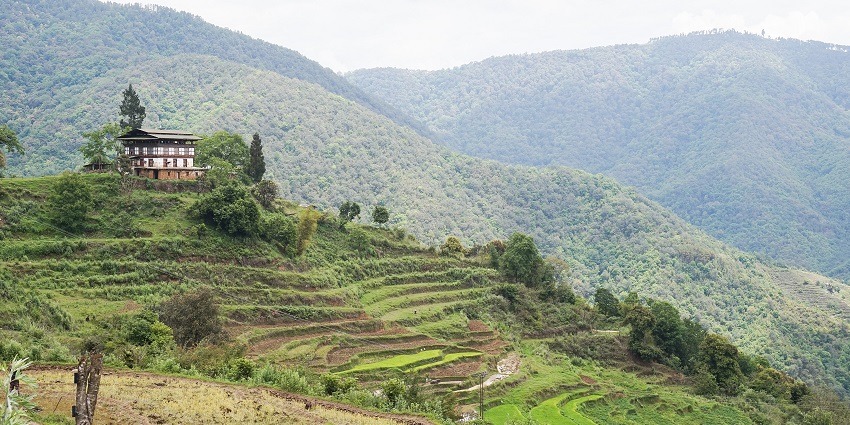
Explore the Bhutan Postal Museum and Create a Stamp
Only in Bhutan. A modern printer in the museum corner allows visitors to create personalized stamps — a bridge between ancient tradition and personal connection. You will leave with your face on a valid Bhutanese stamp, and the option to mail it to someone you love from the Land of the Thunder Dragon.
Visit Changlimithang National Stadium and the Local Archery Ground
More than a sports venue, Changlimithang is a living stage where the country's past and present converge — from royal coronations to archery tournaments, national festivals, and the daily practice of Bhutan's soul sport. Watch archers in traditional Gho send arrows 145 meters to a target the size of a handspan, singing when they hit it. There is ceremony inside everything here.
Day 3, March 17, 2027
Check Out and Early Drive to Punakha
Day 3 begins with a departure — and in Bhutan, even the road is a ritual. The drive from Thimphu to Punakha winds through one of the most breathtaking corridors in the kingdom. You are leaving the capital behind and moving toward the ancient heart of the country.
Stop at Dochula Pass — Coffee with the Himalayas
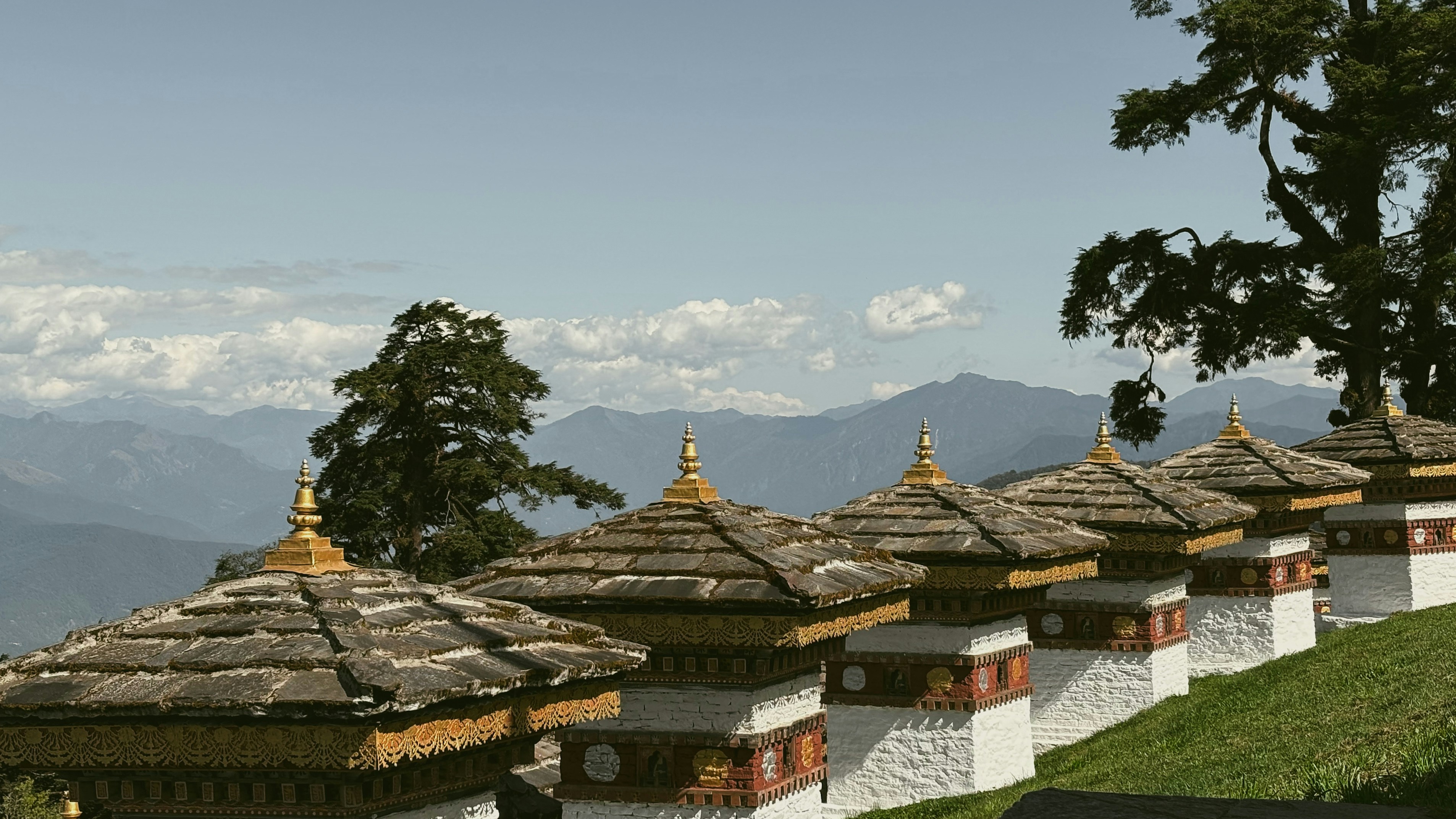
At 3,100 meters above sea level, Dochula Pass sits midway between Thimphu and Punakha, offering a full panoramic sweep of the Eastern Himalayan ranges — including Bhutan's highest peak, Gangkar Puensum, at 7,158 meters. Arranged across the hillside are 108 memorial stupas — one for each worldly desire said to be released on the path to enlightenment — commissioned by the Queen Mother to honor fallen soldiers and celebrate peace. We pause here, cup of coffee in hand, prayer flags snapping overhead, the entire roof of the world spread before us. Some views you prepare for. Some simply arrive.
Lunch at a Local Restaurant
A slow, grounding meal in the Punakha valley before the afternoon unfolds. This is where Bhutan shows you its warmth through food — fresh, earthy, unhurried.
Visit Sangchen Nunnery
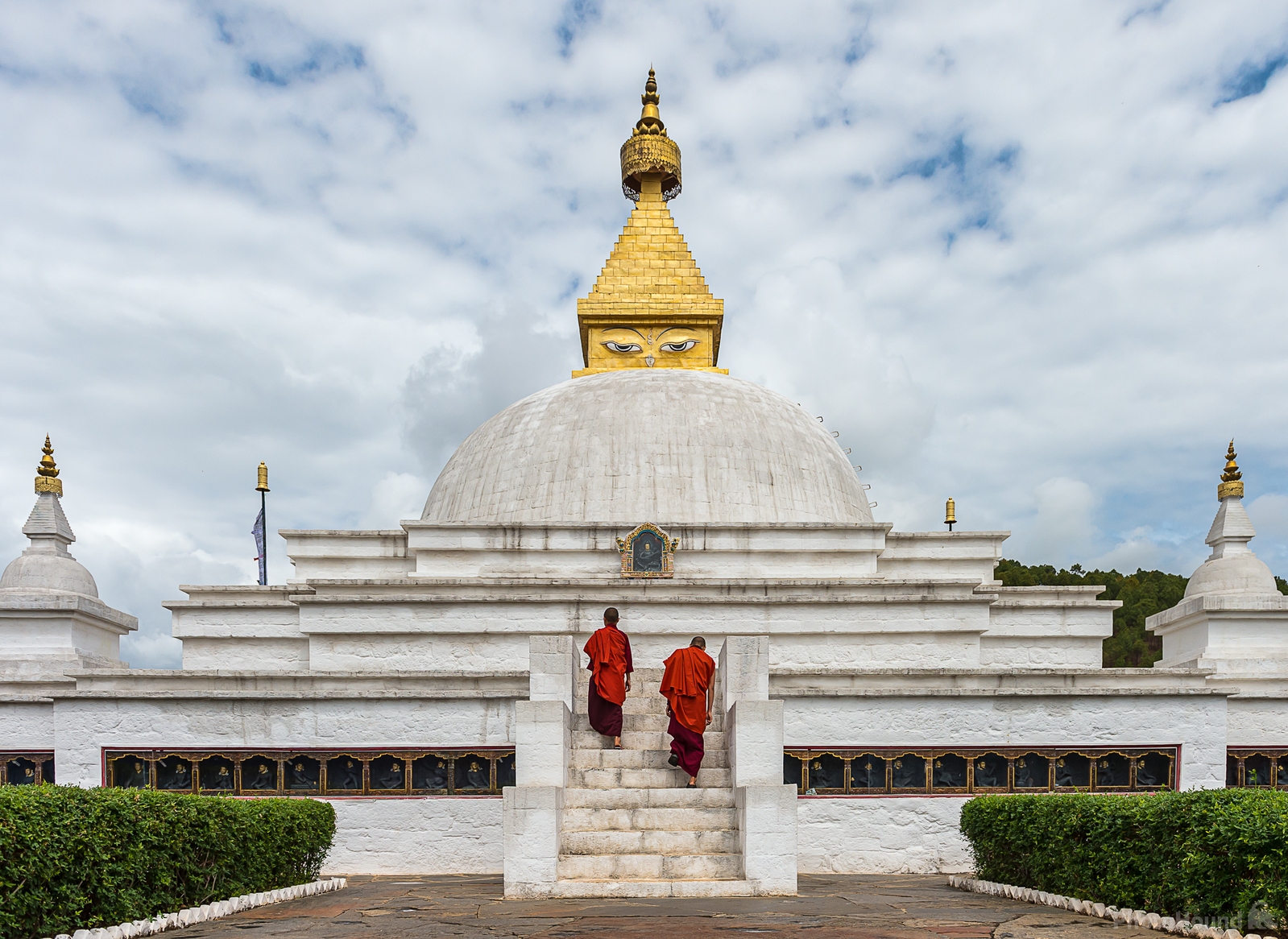
Perched on a ridge overlooking the valleys of Punakha, Toebeasa, and Wangduephodrang, the Sangchen Dorji Lhuendrup Nunnery is both a Buddhist college and a living community — home to around 120 nuns dedicating their lives to prayer, study, and the sacred arts. Beyond spiritual teachings, the nuns train in Thangka painting, embroidery, tailoring, and sculpting — mastery of the inner and the outer, simultaneously. This is a rare encounter with the feminine face of Bhutanese Buddhism.
View of Wangdue and Punakha Valleys / Interact with the Nuns
From the nunnery's ridge, two valleys open before you in one glance — an almost impossible gift of perspective. And then the real treasure: time with the nuns themselves. While Bhutan's culture has traditionally centered on its monks, this nunnery stands as a living testament to the vital role of female practitioners in the country's spiritual life. Conversations here tend to stay with you long after the valley disappears from view.
Visit the Villages of Talo and Nobgang
Two hilltop villages, side by side, each carrying a distinct kind of magic. Talo sits at 2,800 meters, its traditional houses scattered along a ridge above the Punakha valley — and it is from this village that the four Queen Mothers of Bhutan originate. Nobgang's name translates to "the hill of the precious gem" — a name born from legend, when a holy man followed a beam of light to a sacred jewel hidden in the hill, and built a temple on the spot. In the old days, Nobgang was a hermitage destination — a place where great teachers came to disappear into stillness. You will feel that quiet the moment you arrive.
Check In at the accommodation in Punakha
The day closes in one of Bhutan's most beloved valleys — warmer than Thimphu, lush with rice fields and river mist, the ancient capital welcoming you in.
Day 4, March 18, 2027
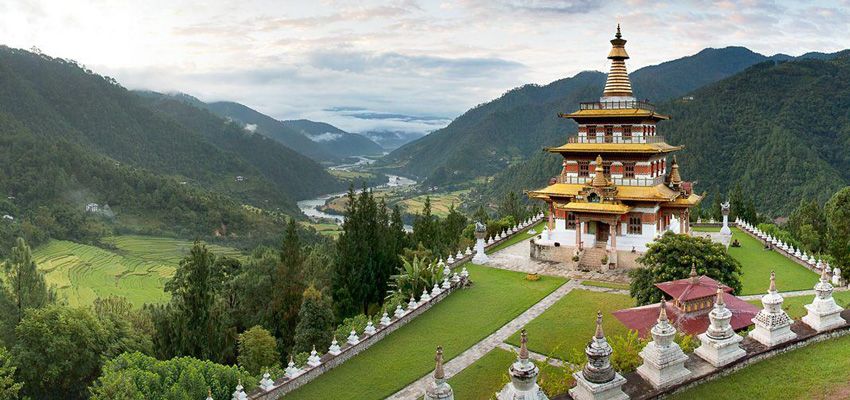
Hike to Khamsum Yulley Namgyal Chorten
This is not a chorten built for monks to live in or students to study. Unlike other Buddhist structures in Bhutan, Khamsum Yulley Namgyal Chorten was built as a magical tool — constructed by the Queen Mother specifically to ward off negative forces and transmit peace and harmony to all living beings. Its very name encodes a cosmology: Khamsum refers to the three realms of existence, Yulley to the land of the deity, and Namgyal to victory and triumph. The two-hour hike to reach it winds through rice terraces, pine forest, and river mist — the kind of walk that empties you before you arrive. Inside, a towering 15-foot Vajrakilaya statue anchors the ground floor, with sacred art dedicated to the subduing of negative forces on every level above, culminating in a golden Buddha on the rooftop. You earn the view. And the view earns you.
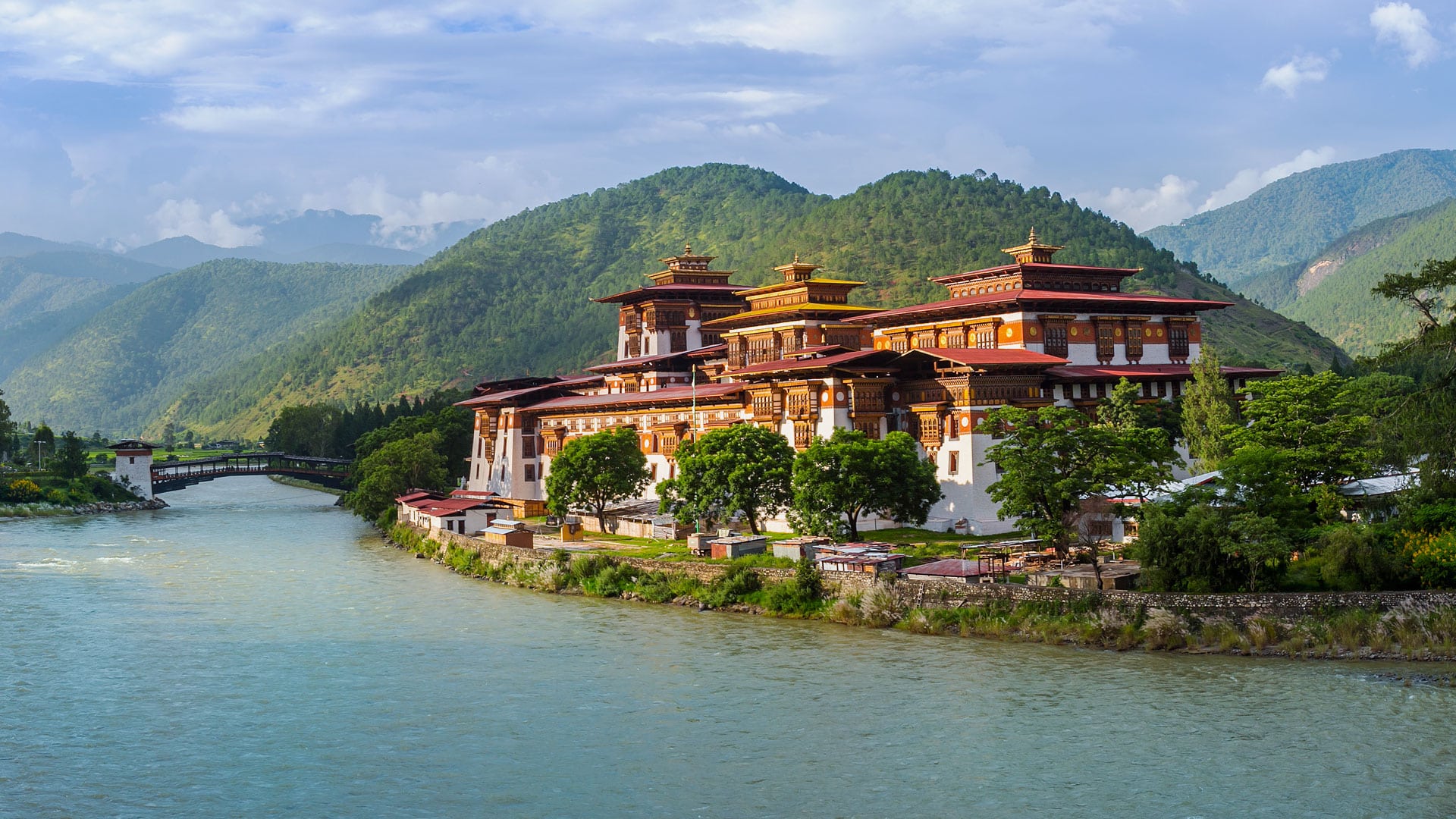
Visit Punakha Dzong
Built in 1637 by the founder of Bhutan, Zhabdrung Ngawang Namgyel, and formally named Pungtang Dechen Photrang Dzong — the Palace of Great Bliss — Punakha Dzong is the second oldest and second largest dzong in the kingdom. Every king of Bhutan has been crowned here. The Zhabdrung himself died within these walls, and his preserved body still rests in a sealed room that only the king and the chief abbot may enter. The dzong sits at the confluence of two rivers — the Pho Chhu and the Mo Chhu, the Father River and the Mother River — and their meeting creates a natural moat around one of the most photogenic and spiritually charged structures in all of Asia. In March, the jacaranda trees bloom lilac against the whitewashed walls. There is no better moment to be standing here.
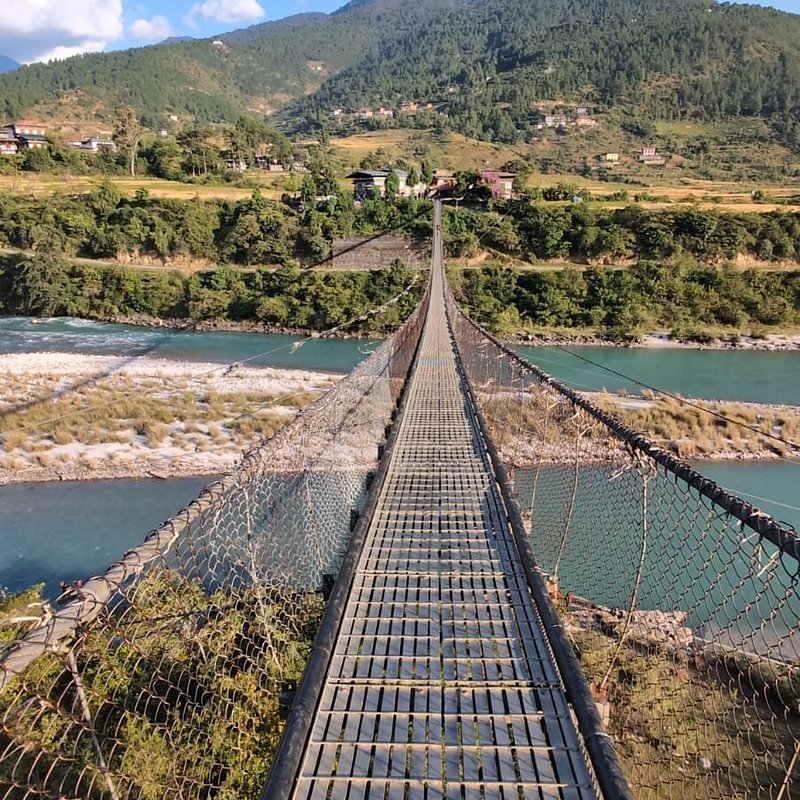
Explore the Suspension Bridge
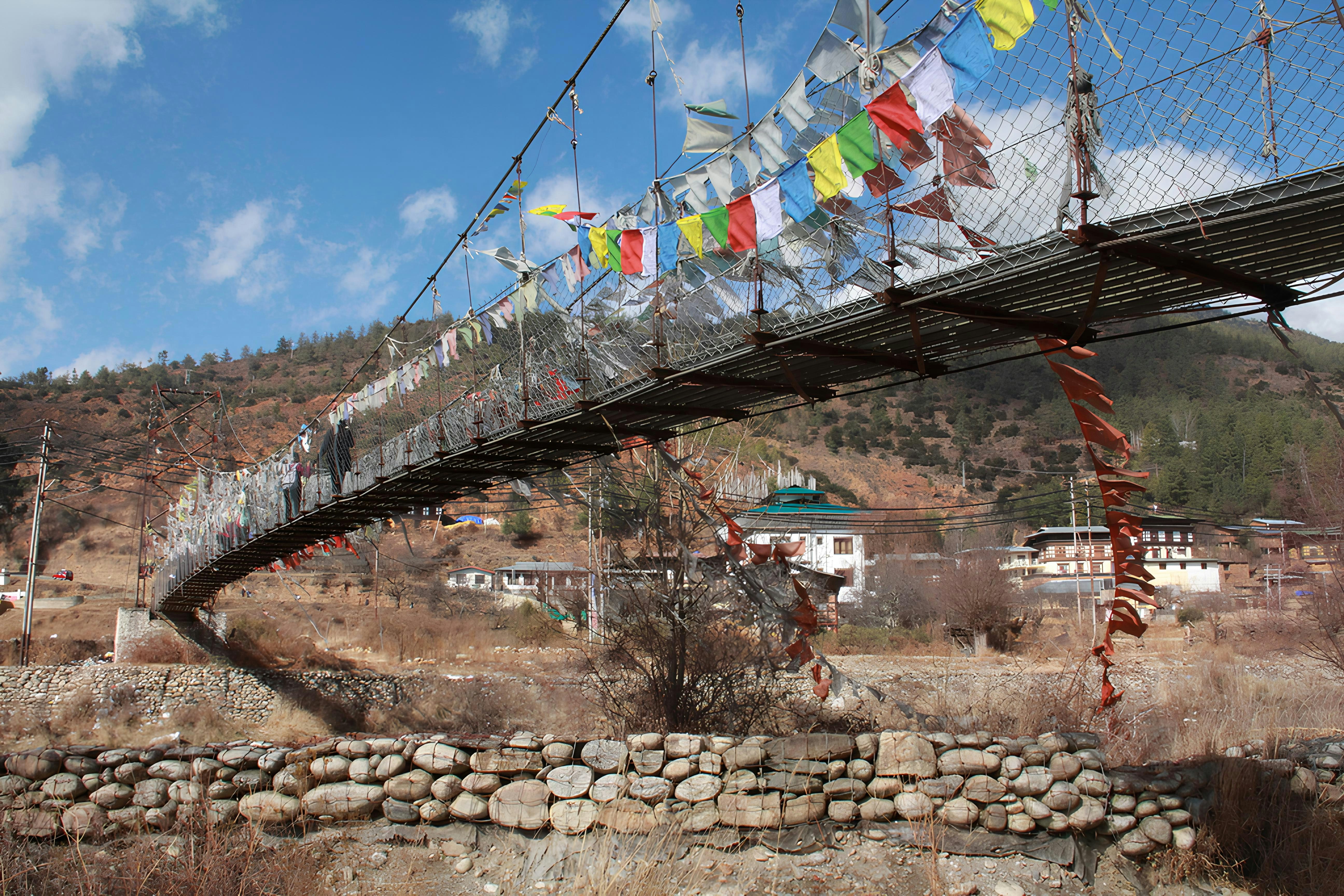
Punakha's suspension bridge is the longest in Bhutan — 180 meters of iron chain and prayer flags stretched above the Pho Chhu River, originally built in the era when Punakha was the capital of the kingdom. Each prayer flag is inscribed with sacred symbols and mantras, believed to carry blessings to all who cross. The bridge sways gently as you walk. The river rushes below. The mountains hold you from all sides. It is thrilling and quiet at the same time — a Bhutanese combination that you will begin to recognize as the country's signature.
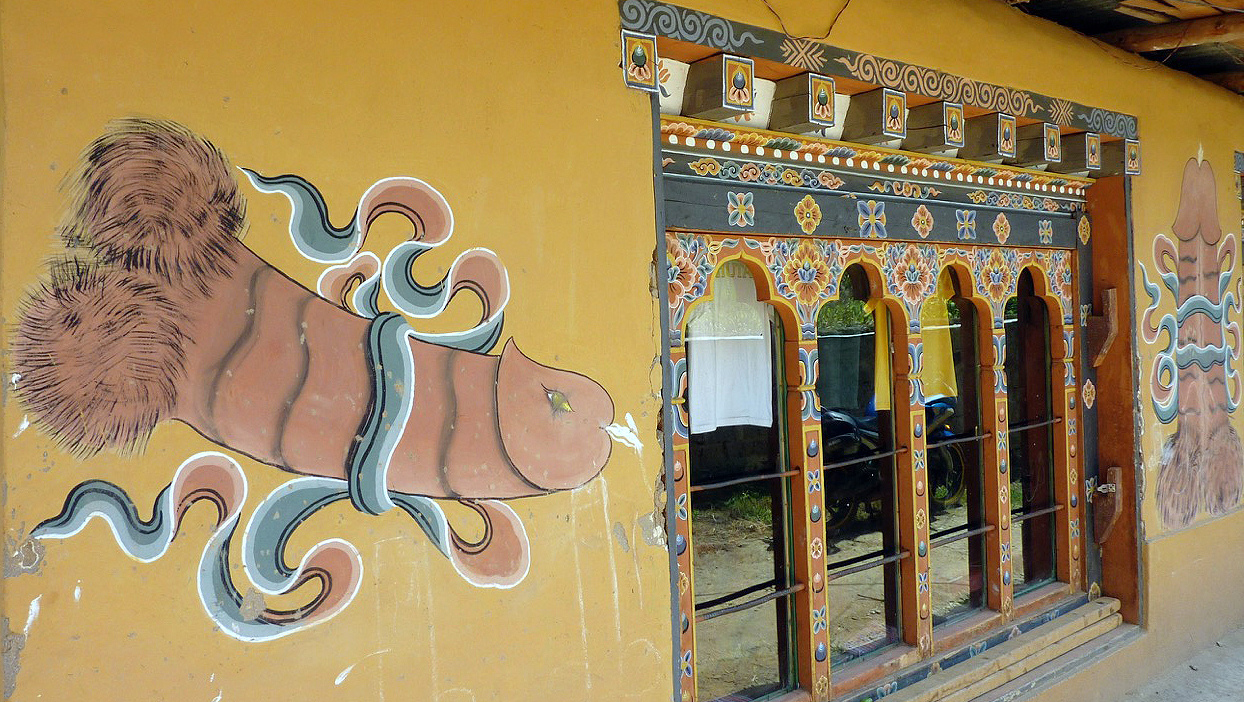
Visit Chimi Lhakhang
No other temple in Bhutan quite prepares you for this one. Chimi Lhakhang was blessed by the maverick 15th-century saint Drukpa Kunley — known as the Divine Madman — who first consecrated this site after subduing a demoness at the very spot where the temple now stands. He used humor, wine, and sexuality as vehicles for spiritual teaching, stripping away ego and pretense, and is revered to this day as one of the most unconventional and beloved figures in Bhutanese spiritual history. The temple is adorned with phallic imagery — a symbol of fertility, protection, and the triumph of life force in Bhutanese culture — and couples from across the world make pilgrimages here seeking blessings for new life. A short walk through rice fields and a hillock arrival. A place that will make you smile and stop you in your tracks simultaneously.
Day 5 · March 19, 2027
Check Out and Drive Back to Paro
Day 5 is a homecoming of sorts. You leave Punakha — warm, river-laced, ancient — and begin the drive back toward Paro, retracing the pass with new eyes. The road you traveled days ago now carries everything you've gathered since.
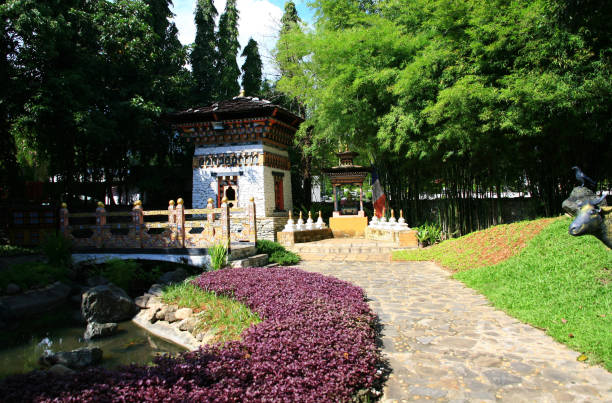
Stop at Royal Botanical Garden, Lamperi
Bhutan's first botanical park, Lamperi, sits just below Dochula Pass, forming a living biological corridor between two of the country's great national parks. Its 125-acre garden contains 46 species of rhododendron — 18 native to the park, the rest gathered from regions across Bhutan — and by mid-March, they are beginning to bloom. Musk deer roam the grounds without fear, and a small reflective lake offers a moment to simply sit and let the forest hold you. After days of temples and dzongs and sacred history, this is a different kind of transmission — the intelligence of the land itself, offered in silence and color.
Visit Rinpung Dzong and Paro Ta Dzong
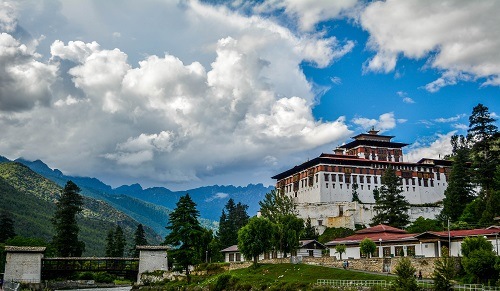
Rinpung Dzong — officially called the Fortress on a Heap of Jewels — was built in 1646 under the guidance of Zhabdrung Ngawang Namgyel and stands as one of the finest examples of Bhutanese architecture in existence. You will have seen it from the air as you landed — impossible to miss, white and gold above the valley. Walking through it is something else entirely. Then, directly above it on the ridge: Ta Dzong. Originally built as a watchtower in 1649, its unusual circular shape was specifically designed to offer a full 360-degree view of the valley — and its structure symbolizes a conch shell, a sacred Buddhist emblem of good fortune. It now houses the National Museum of Bhutan, with over 3,000 artifacts including bronze statues, Thangka paintings, and objects as old as 1,500 years. Two buildings, one above the other, each telling half the story of Paro.
Optional: Zuri Hike
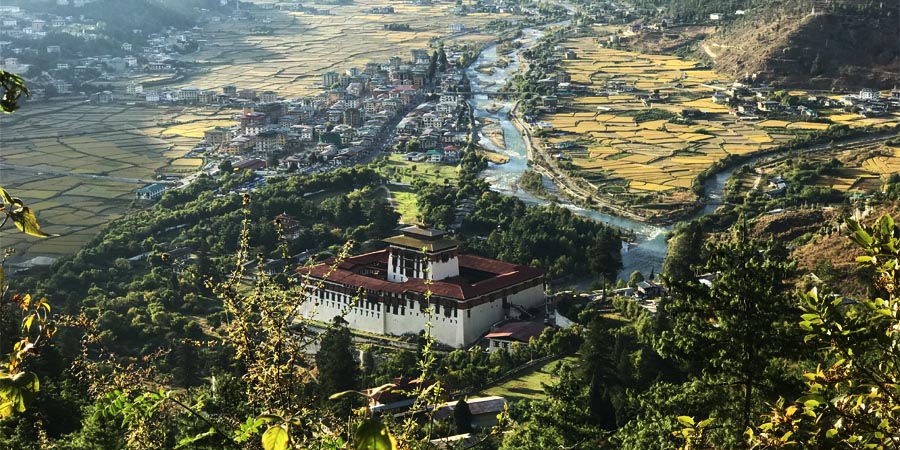
For those who want to go higher. Zuri Dzong sits at 2,400 meters, watching over Paro Valley like a silent guardian. Built in 1352, it is one of Bhutan's oldest fortresses — and legend holds that the Buddha once meditated in a cave on this very hillside. The trail winds through cypress and pine forest for roughly 1.5 hours from the National Museum, revealing sweeping views of the entire Paro Valley below. From the top, the Rinpung Dzong glows small and perfect beneath you, the airport runway threads the valley floor, and on a clear afternoon, the Himalayan peaks show themselves. It is the kind of view that recalibrates things.
Stroll Through the Market Area
Paro's market street is lined with traditional houses and quaint shops — an unhurried, genuinely beautiful place to move through, with the Paro Dzong visible from one end of the lane. Local wines made from peach, grape, and rhododendron sit alongside hand-carved wooden objects, woven textiles, prayer wheels, and Thangka paintings. This is where you slow all the way down. Where you let Bhutan come to you in small, handmade things. Where you choose what to carry home.
Check In at Accommodation in Paro
Back in Paro. The valley you first arrived in now feels like it belongs to you a little — or you to it.
Day 6 · March 20, 2027
Hike to Taktsang Monastery — Tiger's Nest
This is the one. The reason people fly halfway across the world to stand in a valley and look up.
Perched on the edge of a 3,120-meter cliff in the Paro Valley, Paro Taktsang — Tiger's Nest Monastery — is Bhutan's most iconic landmark and the spiritual heart of the nation. Its legend begins in 747 AD, when Guru Rinpoche arrived at this sheer rock face riding a tigress — the transformed form of his divine consort — to subdue the evil spirits of the locality. He then meditated here, revealing the Mandala of Pelchen Dorje Phurpa and delivering sublime teachings to his disciples. The monastery was built around that sacred cave in 1692, and has held this clifftop ever since — surviving fire, centuries, and the impossible physics of its own existence.
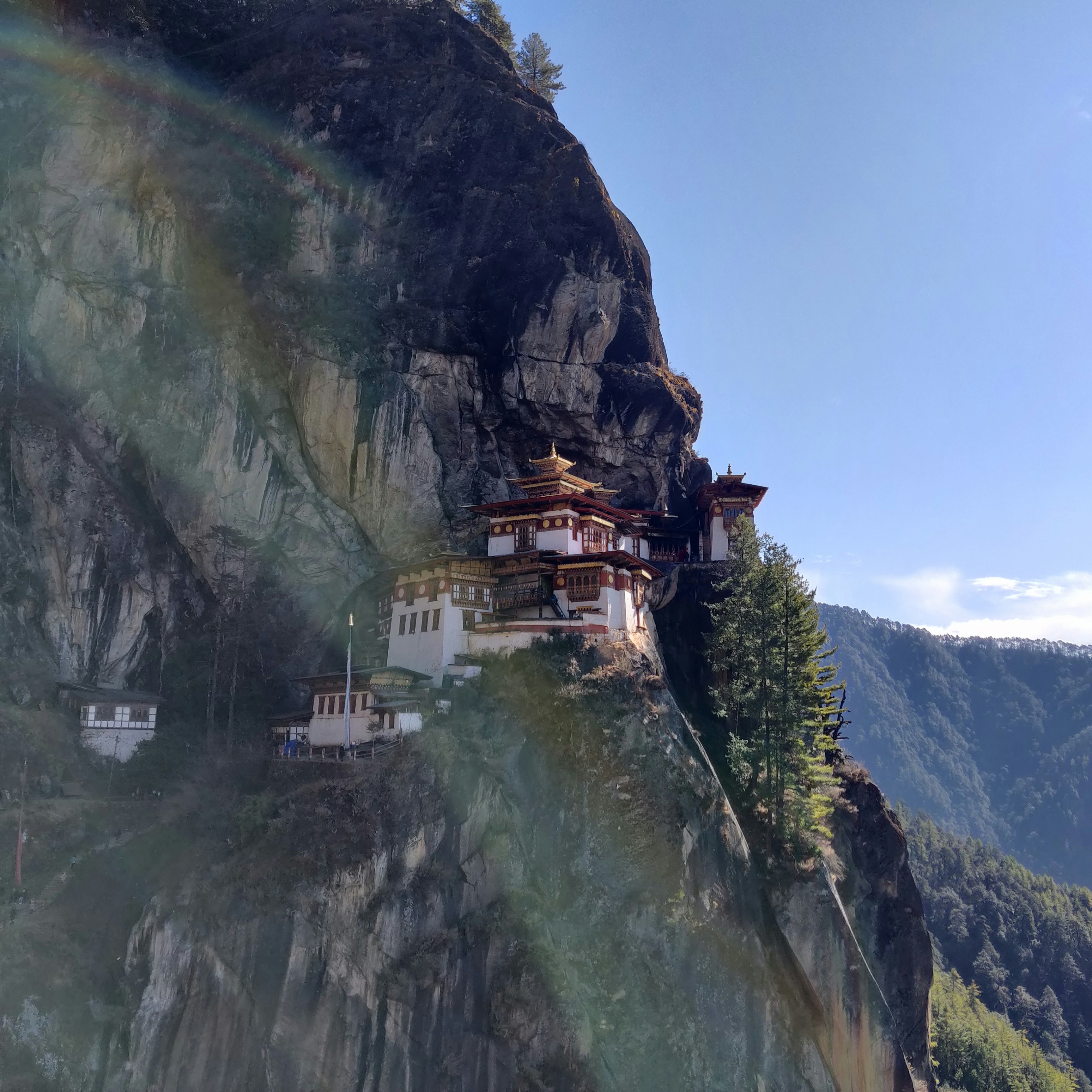
The hike is three hours upward through blue pine forest, past prayer flags and chortens, the monastery appearing and disappearing in the mist as you climb. Every step is the approach. Halfway up, the Taktsang Cafeteria offers a panoramic view of the monastery suspended across the gorge — one of the most iconic vistas in all of Bhutan. When you finally cross the bridge and pass through its gates, the scent of juniper smoke, the sound of butter lamps, and the weight of thirteen centuries of devotion all arrive at once. Two hours back down. You will feel different on the descent than you did on the ascent.
Visit Kyichu Lhakhang
After Taktsang's altitude and drama, Kyichu offers something quieter — and in its own way, even older. Built in the 7th century by the Tibetan Buddhist King Songtsen Gampo, Kyichu Lhakhang is one of the oldest temples in the entire Buddhist Himalayas — one of 108 temples he constructed in a single day across Tibet and the Himalayas to subdue a giant demoness and open the land to the Dharma. Kyichu was built directly on her left foot. In the 8th century, Guru Rinpoche himself visited and concealed spiritual treasures within its walls — hidden teachings still held within the stone. Today, elderly pilgrims constantly shuffle around the temple spinning prayer wheels, making this one of the most charming and alive spots in the entire Paro valley. The wooden floor of the main temple is worn smooth by centuries of prostrations. Two orange trees in the courtyard are said to bear fruit all year long.
Practice Traditional Archery
Bhutan is the only country in the world where archery is the official national sport — and watching it, you begin to understand why. This is not silent, focused Olympic archery. Archers shoot arrows over a distance of 145 meters at a target the size of a handspan, and when an arrow hits its mark, teammates burst into song and dance. There is ceremony, rivalry, ritual, and joy woven into every round. Trying it yourself is humbling and revelatory. The bow is heavier than expected. The target is impossibly far. The Bhutanese make it look effortless — which is perhaps the point.
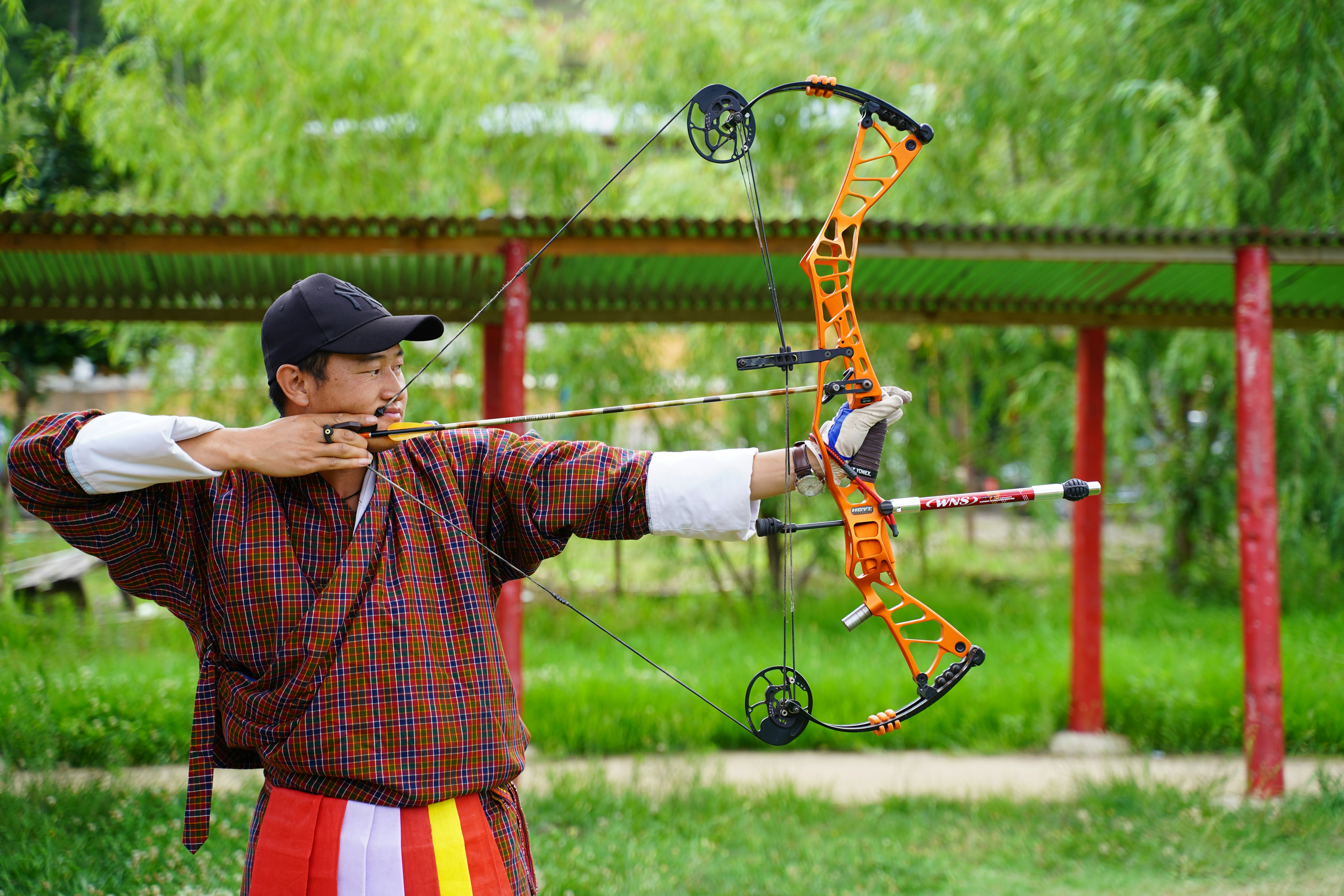
(Photo by nimrod sheinman on Unsplash)
Traditional Hot Stone Bath — Menchu
The perfect ending for a day that has asked everything of your body and your soul.
Known as dotsho, the Bhutanese hot stone bath is a therapeutic ritual deeply embedded in gSo-ba Rig-pa — Bhutan's traditional medicine system, with roots in both Tibetan and Ayurvedic healing. River stones are selected, heated over open fire until glowing red, then placed into wooden tubs filled with menchu — medicinal water infused with local Artemisia leaves. As the stones release their minerals into the water, the bath becomes a source of deep relief for sore muscles, fatigue, and stress. Families in Bhutan have practiced this ritual for generations after long months of fieldwork — soaking together for weeks, often choosing an auspicious day, believing that medicinal acts performed on sacred timing carry greater healing power.
Day 7 · March 21, 2027
Breakfast / Check Out / Group Transfer to Paro Airport — Journey Ends
The last morning in Bhutan arrives quietly. There is something about the way this country holds its silence — even the goodbyes feel ceremonial here.
You came in through Paro Valley seven days ago. You leave through it now — the same mountains, the same river threading the valley floor, the same prayer flags crossing the air above the road. Everything looks the same. You are not the same.
As your plane ascends, you are given one final gift — a bird's-eye sweep of snow-capped Himalayan peaks, centuries-old monasteries perched on cliffs, and emerald terraced fields disappearing beneath the clouds. The final fifteen minutes of the flight offer unparalleled views of the Himalayan range — the departure itself is as dramatic and awe-inspiring as the arrival was.
Bhutan does not let you leave easily. It sends you off with the full weight of what you carried through it — temples, fire-heated stones, butter lamps, tiger nests, archery songs, nuns at prayer, valleys you will try to describe to people who were not there. You will find that it resists language. That is how you know it went somewhere real.
The journey ends here. What it opened does not close.
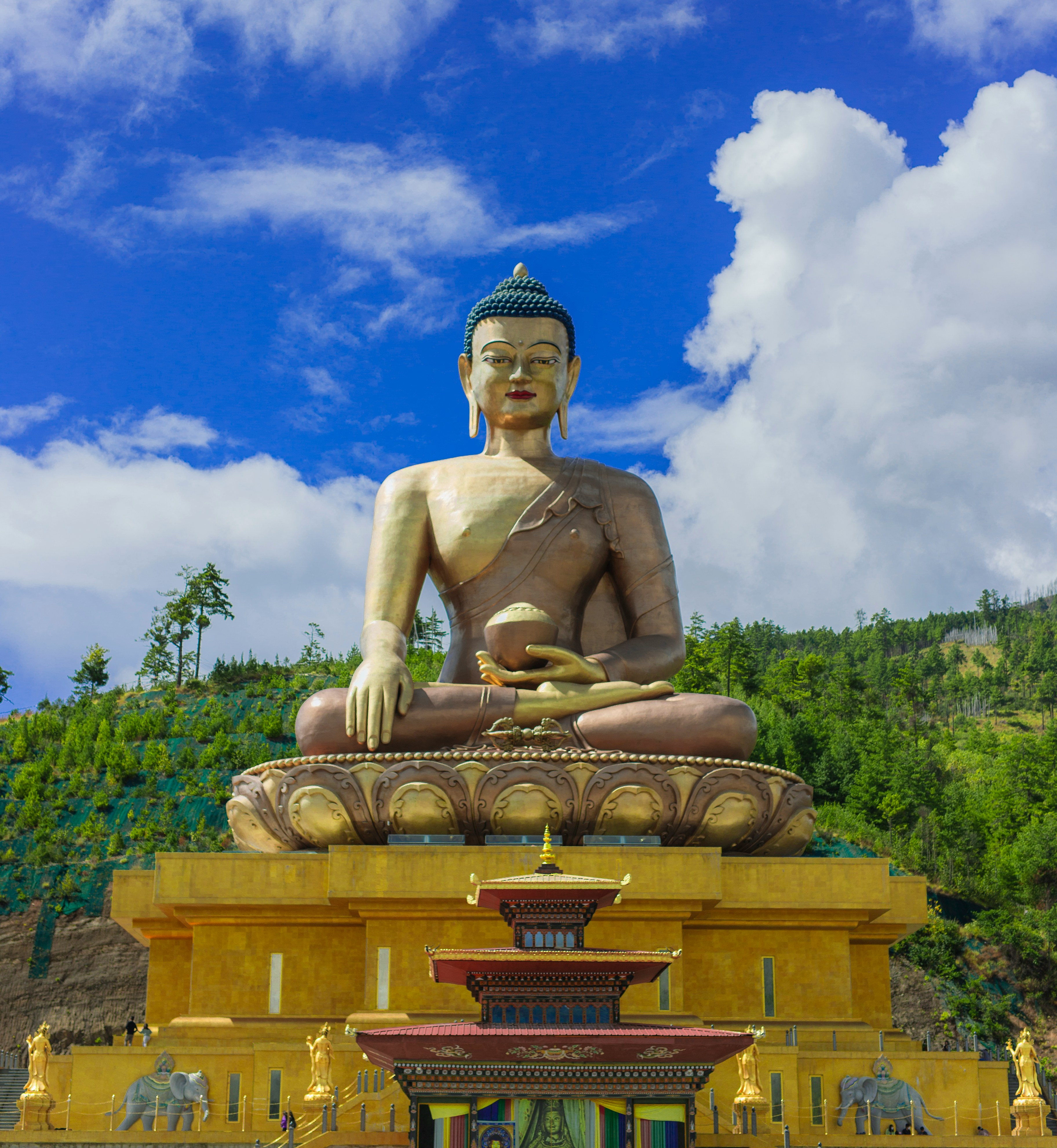
(Photo by Passang Tobgay on Unsplash)
All the logistics:
- 2 nights at accommodation in Thimphu
- 2 nights at accommodation in Punakha
- 2 nights at accommodation in Paro
- Double or single occupancy in accommodation
- Breakfast day 7
- Lunch day 3
- 1 group arrival airport transfer
- 1 group departure airport transfer
- All activities & tours listed in itinerary
- Dedicated English-speaking Bhutanese guide
- Chauffeured-driven car
- Baggage handling everywhere on your tour
- Free Wi-Fi and internet in most of the hotel rooms and lobbies
- Sustainable Development Fee (SDF) to the Government of Bhutan for visa approval
- Bhutan visa
- Please note that the included transfers are group transfers, which may require waiting for other travelers. Upon confirmation of your trip, we will send you an email with the recommended arrival and departure timeframes.
- Flights
- All meals & drinks not listed in inclusions
- Personal expenses
- Gratuities
- Optional activities/add-ons
- Travel insurance
It is only $99 to reserve your spot!
You can also pay in full or choose an alternative deposit.
We need a minimum number of travelers to make this trip happen.
We have until December 10 to have that minimum number (12) - so if you want to join us, put your deposit down through the company called Tour Hero - I am co-creating this trip with them.
If the group won't come together by December 10, you will get your deposit back, and the trip will be canceled.
Click >>> HERE IS THE LINK TO BOOK YOUR SPOT
🌟 Visit my Soul Wisdom Store for instant access to transformational courses and sacred teachings. Each course infuses intuitive guidance and ancient wisdom to help you unlock your highest potential. → Explore the Soul Wisdom Store >>> here.
Author

