
The Wonder of Bhutan: The Dragon Kingdom is calling
Feb 16, 2026I need to tell you about a place.
A place so sacred, so untouched, so quietly powerful that when I started researching it for our trip, I had to stop and just… sit with it.
Bhutan.
The Land of the Thunder Dragon.
That's not a marketing name. That's what the Bhutanese call their own country — Druk Yul. They call themselves Dragon People. Their king's title is Dragon King.
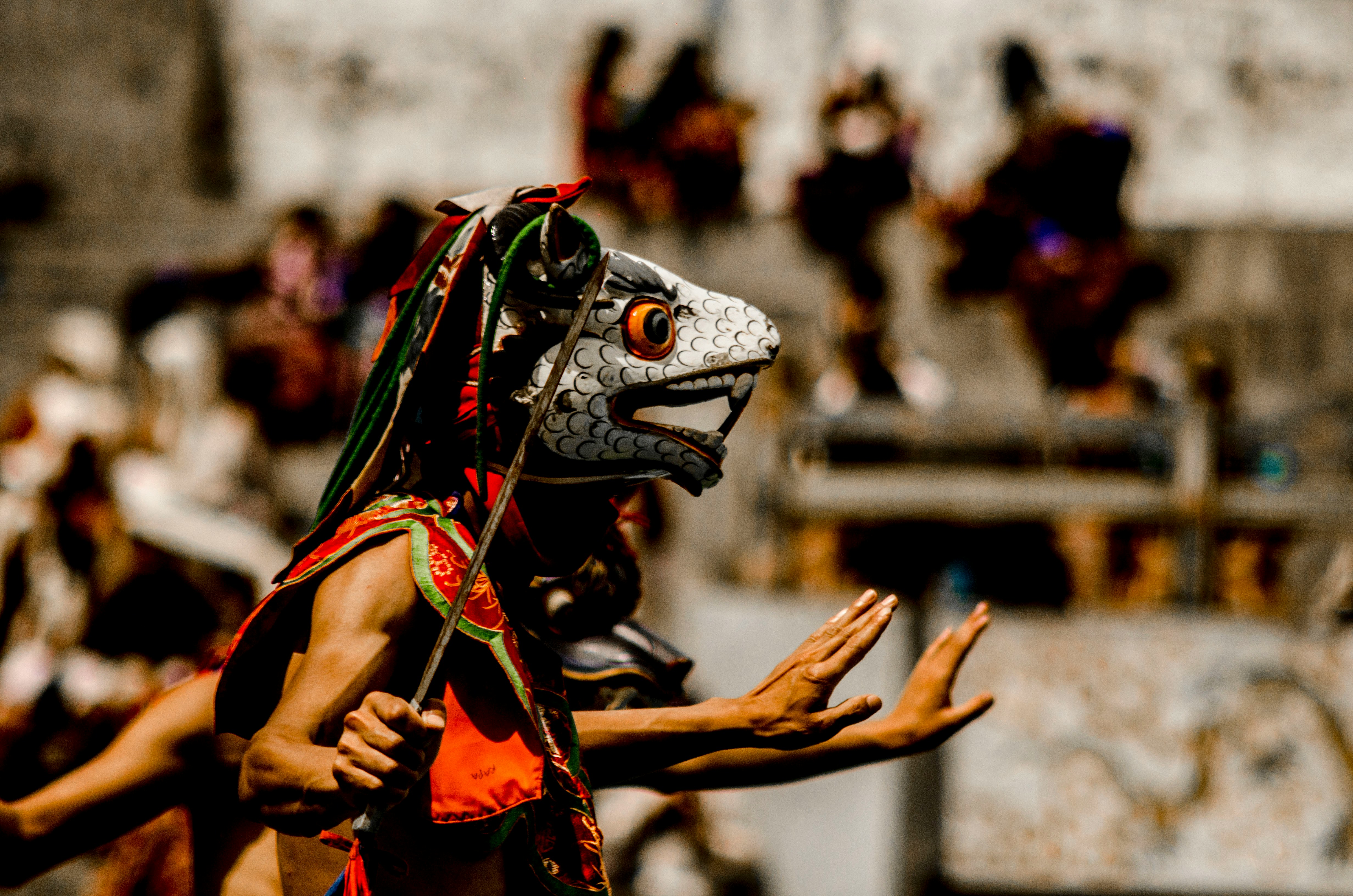
(photo credit: Ujwal Hollica)
This country has never been colonized.
Not once. Not ever.
While the rest of the world was being conquered, converted, and stripped of its spiritual heritage, Bhutan said no.
They closed their borders. They protected their traditions. They didn't even allow foreigners to visit until the late 20th century.
What does that mean for us?
It means the temples we'll walk through carry the original frequency. The sacred dances performed in monastery courtyards have been passed down unchanged since the 17th century. The lineages are unbroken. The prayers have never stopped.
You won't be visiting a reconstructed version of something ancient.
You'll be stepping into the real thing.
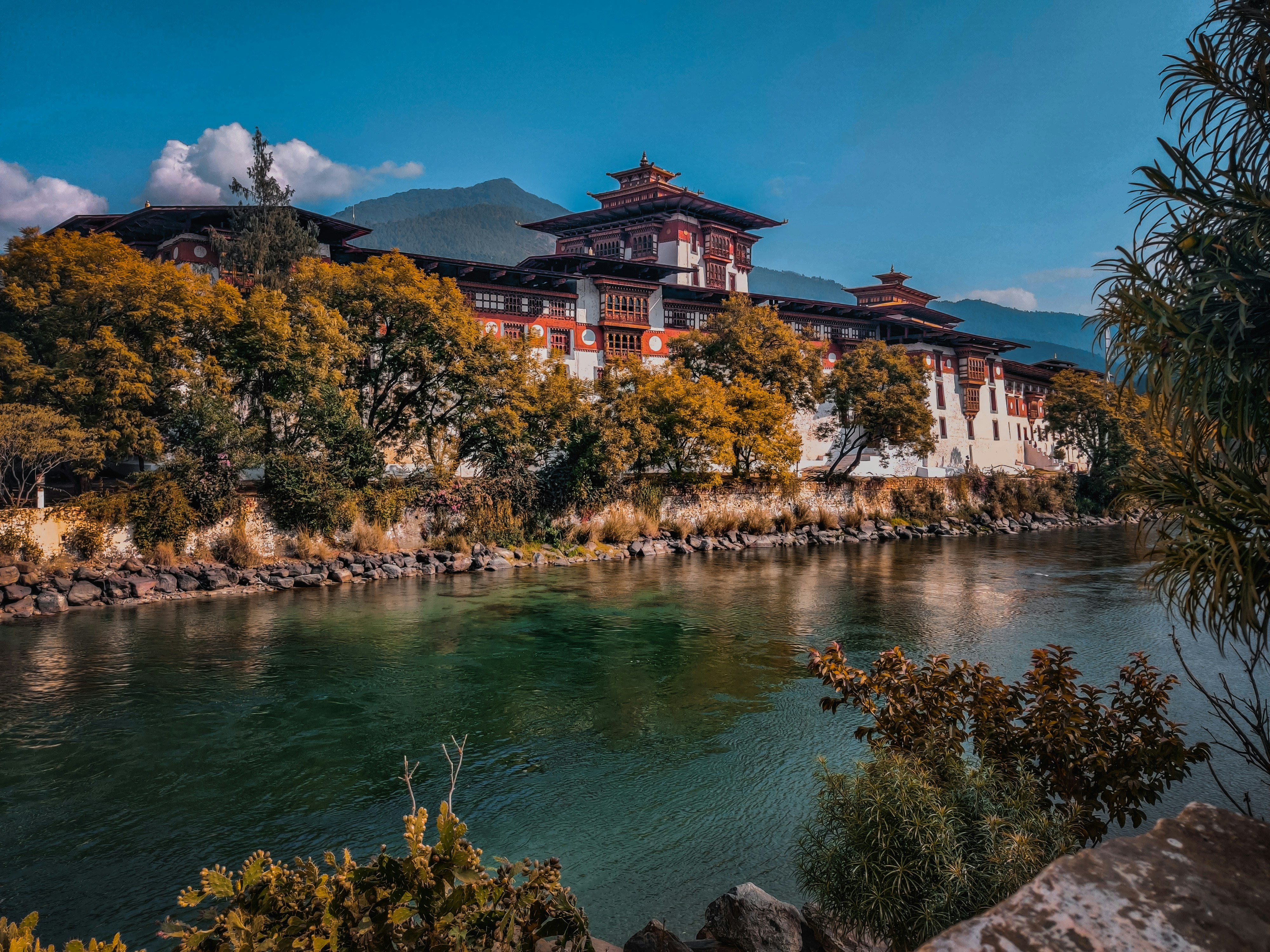
(photo byArghya Mondal )
Now here's what really stopped me in my tracks.
Bhutan is the only country on Earth that is carbon negative.
Not neutral. Negative.
Their forests cover over 70% of the land, and their constitution mandates that it can never drop below 60%. Ever. That's written into their highest law. The land absorbs far more carbon than the country produces.
You will literally be breathing some of the purest, most vibrationally clean air on the planet.
The land itself is doing clearing work. Before you even set foot in a temple.
And then there's this.
While every other nation on Earth measures success by GDP — by how much money flows through the economy — Bhutan chose something radically different.
They measure Gross National Happiness.
Not as a cute slogan. As actual policy. Every government decision is evaluated through four pillars: sustainable development, environmental protection, cultural preservation, and good governance.
A country that chose the soul over the spreadsheet.
A country that asked: are our people happy? Are they spiritually well? Is the land thriving?
And built their entire governance around the answer.
If that doesn't give you chills, read it again.
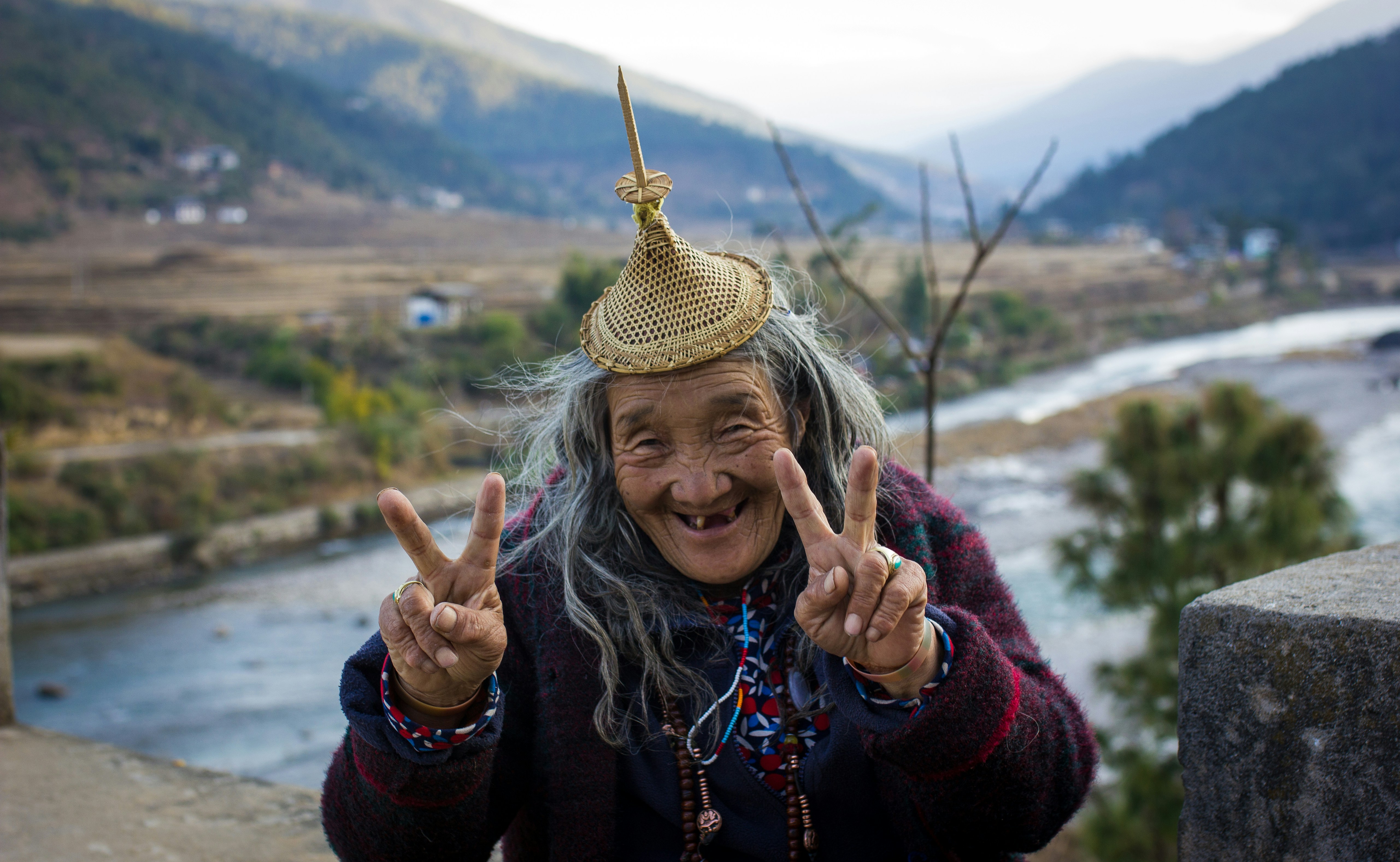
(photo byGaurav Bagdi )
Let me paint the picture of what we'll experience together.
Imagine hiking through pristine mountain forests to reach Tiger's Nest Monastery — a sacred temple literally clinging to a sheer cliff face, thousands of feet above the valley floor. The trail itself is a pilgrimage. The arrival is an initiation.
Imagine walking through dzongs — massive fortress-monasteries built in the 17th century that serve as both spiritual sanctuaries and seats of governance. Spirit and sovereignty, under one roof.
Imagine standing among 108 sacred stupas at a mountain pass, prayer flags snapping in the Himalayan wind, carrying blessings in every direction.
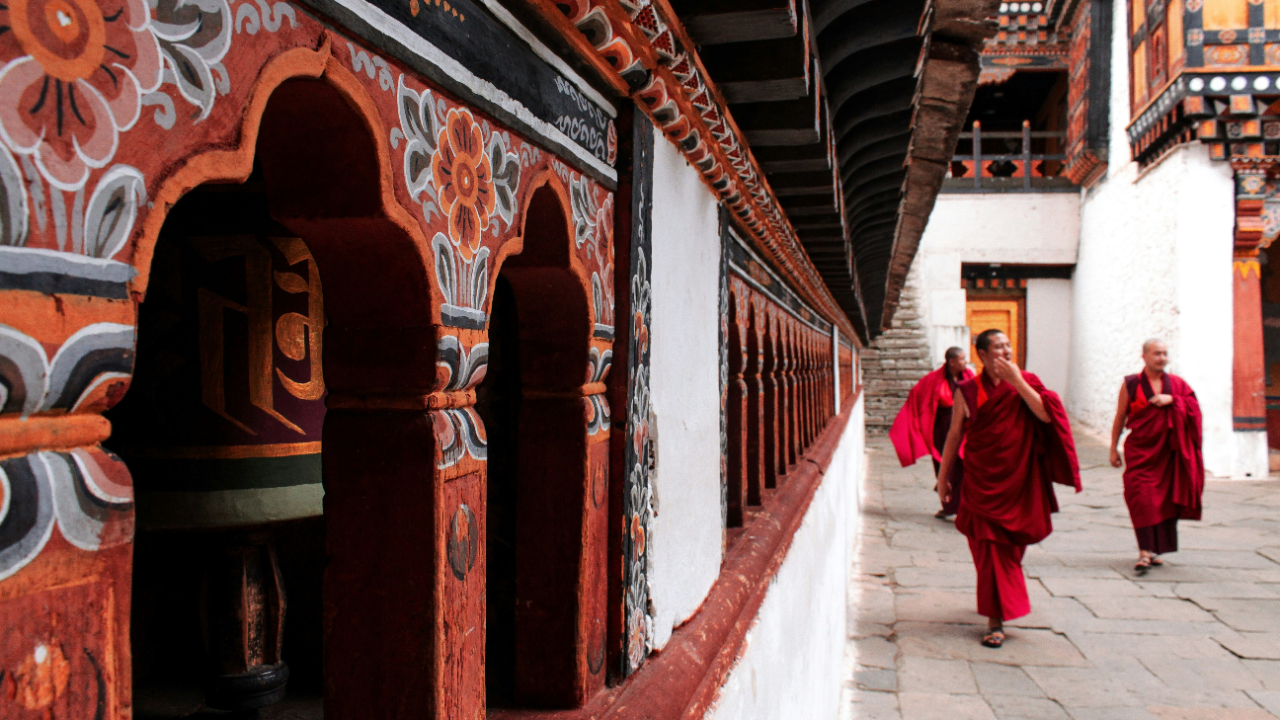
Imagine watching monks in crimson robes spin prayer wheels inscribed with ancient mantras — Om Mani Padme Hum — sending purification and compassion into the atmosphere.
Imagine a place where there isn't a single traffic light. Not even in the capital city. Where the Bhutanese still wear their traditional dress — not for festivals, not for tourists — but every single day. Because their culture isn't preserved in a museum. It's worn. It's lived. It's breathed.
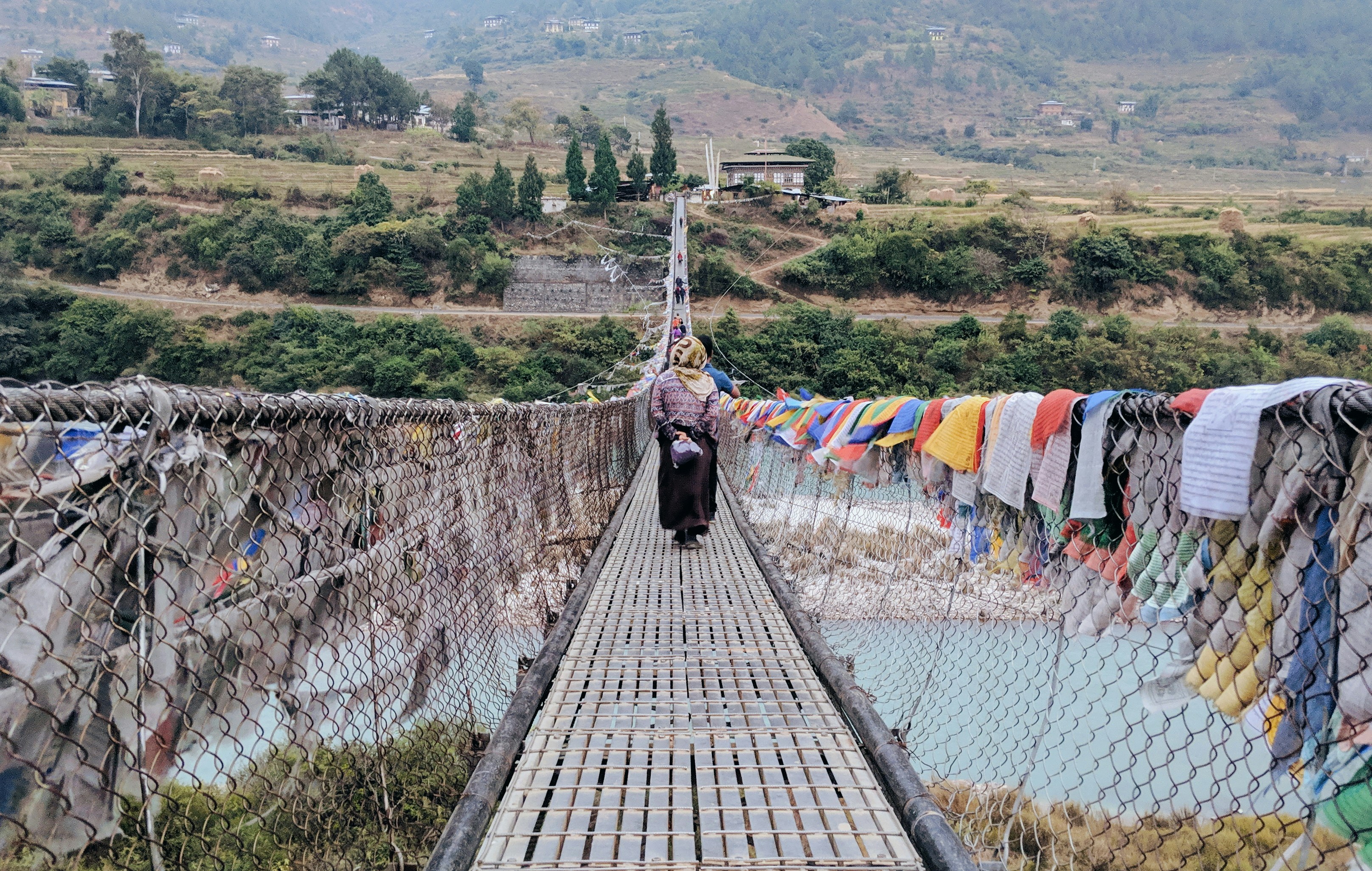
(photo by Faris Mohammed)
Buddhism isn't a religion in Bhutan. It's the operating system.
Daily life begins and ends with prayer. Butter lamps glow in every temple. Prayer flags line every mountain path. Monks undertake silent retreats lasting three years, three months, three weeks, and three days.
The sacred isn't separate from the mundane here. It is the mundane.
Mountains are considered living deities. Lakes are home to gods. Certain peaks are too sacred to ever be climbed.
This is a country where the veil between worlds isn't thin.
It barely exists.
And then there's the Divine Madman.
One of Bhutan's most beloved saints — Drukpa Kunley — was known for his wild, irreverent, boundary-breaking approach to enlightenment. He used humor, shock, and unconventional wisdom to awaken people. His legacy lives on in the Fertility Temple and in the colorful, unapologetic art you'll see painted on homes throughout the country.
Sacred doesn't mean sterile in Bhutan. It means alive. Playful. Real. Full-bodied.
Sound like anyone you know? 😉
Here's what I know to be true.
There are places on this Earth that hold codes. Ancient places where the frequency is so high, so preserved, so intact that simply being there activates something deep inside you.
Bhutan is one of those places.
And I don't say that lightly.
This is the kind of journey that strips away everything that isn't real — and leaves you standing in your own truth, your own power, your own remembering.
I would be honored to guide you there.
👉 See the full trip details, itinerary & pricing here
If your soul is stirring right now — if something in your chest just said yes — don't overthink it.
Sit with it. Meditate on it. Sleep on it.
And when you feel that full-body YES…
Put your deposit down and join us.
The Dragon Kingdom is calling.
With love and reverence,
Katerina
P.S. — Bhutan limits the number of visitors allowed into the country each year. This isn't mass tourism. This is sacred travel. Spaces are limited, and when they're full, they're full. If your soul is saying yes, honor that.
🌟 Visit my Soul Wisdom Store for instant access to transformational courses and sacred teachings. Each course infuses intuitive guidance and ancient wisdom to help you unlock your highest potential. → Explore the Soul Wisdom Store >>> here.
RECEIVE MY MONTHLY TRANSMISSION OF GUIDED PRACTICAL WISDOM
SPAM is bad karma. We will never sell or misuse your information, for any reason.
Author

